
Normal Balance of Accounts

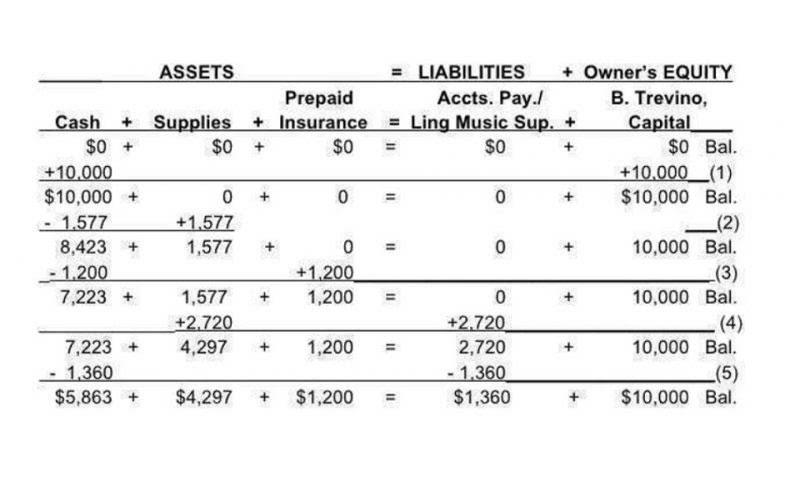
Financial Transaction Substantiation refers to detailed original source documentation and/or work papers that support financial transactions showing why and how a transaction was completed. Substantiating financial transactions ensures the integrity of an entity’s financial reports and is an important tool for account management and for the preparation of external audits. Accounting Terminology is necessary to understand as it aids in interpreting transactions within the accounting function and helps to ensure accuracy of financial information. To review the revenues, expenses, and dividends accounts, see the following example.
Revenues and gains are usually credited

The book value of a company equal to the recorded amounts of assets minus the recorded amounts of liabilities. As a result these items are not reported among the assets appearing on the balance sheet. The 500 year-old accounting system where every transaction is recorded into at least two accounts. Accounts Receivable is an asset account and is increased with a debit; Service Revenues is increased with a credit.
UCO-AFO-1.02: Financial Transaction Substantiation
- If the rented space was used to manufacture goods, the rent would be part of the cost of the products produced.
- Debit pertains to the left side of an account, while credit refers to the right.
- Assume he bought the computers with cash and his starting cash account had $25,000 in it.
- This is important for the university’s externally audited consolidated financial statements as well as internal management reporting for decision making.
- Thousands of people have transformed the way they plan their business through our ground-breaking financial forecasting software.
A business transaction is the exchange of goods or services for a form of payment. An example journal entry recorded in IU’s KFS is included below. On the other hand, Liability, Owner’s Equity, Revenue, and Retained Earnings accounts usually have credit balances. So taking out a loan credits the Liability account, and making a sale credits the Revenue account. Owner’s investments into the business and profits retained from operations also have credit balances.
Contra Accounts

While not required, the best practices outlined below allows users to gain a better picture of the entity’s financial health and help identify potential issues on a more frequent basis. This allows organizations to identify errors, mistakes, and pitfalls which can be remedied quickly and prevent larger issues in the future. Below is a basic example of a debit and credit journal entry within a general ledger. A normal balance is the side of the T-account where the balance is normally found.
- These accounts typically have a debit balance because expenses decrease equity.
- It will contain the date, the account name and amount to be debited, and the account name and amount to be credited.
- This means that when you make a debit entry to an asset account.
- Revenue accounts track the income a company earns from its normal business operations, such as sales of goods or services.
- Meanwhile, liabilities, equity, and revenues should be Credit.
- Before diving into the normal balance of an account, it is essential to understand the types of accounts used in accounting.
Contra Accounts: The Counterbalancing Act
It’s essentially what’s left over when you subtract liabilities from assets. When owners invest more into the business, you credit the equity account, hence, it has a normal credit balance. One of the fundamental principles in accounting is the concept of a ‘Normal Balance‘. Whether you’re an entrepreneur or a seasoned business owner, understanding the normal balance of accounts is crucial to keeping your business’s financial health in check. Double-entry bookkeeping is a systematic method for recording financial transactions that requires each entry to have corresponding and opposite effects on at least two different accounts.
Normal balance is a fundamental concept in accounting that determines the expected side or category where an account balance should appear. It helps ensure accurate recording, consistent classification, and reliable reporting of financial transactions. By understanding the normal balances of different accounts, accountants can maintain the integrity and usefulness of financial information. By understanding the normal balances, accountants can properly record what are normal balances in accounting and classify transactions, maintain accurate financial records, and prepare reliable financial statements.

Income Statement
By following the expected normal balances, accountants ensure that financial statements accurately represent the financial position, performance, and cash flows of the business. When a financial transaction occurs, it affects at least two accounts. For example, purchase of machinery for cash is a financial transaction that increases machinery and decreases cash because machinery comes in and cash goes out of the business. The increase in machinery Budgeting for Nonprofits and decrease in cash must be recorded in the machinery account and the cash account respectively. As stated earlier, every ledger account has a debit side and a credit side. Now the question is that on which side the increase or decrease in an account is to be recorded.
- If a company provides a service and gives the client 30 days in which to pay, the company’s Service Revenues account and Accounts Receivable are affected.
- Because the rent payment will be used up in the current period (the month of June) it is considered to be an expense, and Rent Expense is debited.
- Then on February 18, 2020, it paid $500 to its supplier for purchased inventory on February 05, 2020.
- The bursar accounts receivable balance will be debited by $200, showing an increase in the asset balance.
- For example, you can use a contra asset account to offset the balance of an asset account, and a contra revenue accounts to offset the balance of a revenue account.
- Normal balances ensure financial records are accurate and reliable.
Cash account

The accounting term that means an entry will be made on the left side of an account. As a result of collecting $1,000 from one of its customers, Debris Disposal’s Cash balance increases and its Accounts Receivable balance decreases. You might think of G – I – R – L – S when recalling the accounts that are increased with a credit. You might think of D – E – A – L when recalling the accounts that are increased with a debit. To debit an account means to enter an amount on the left side of the account. To credit an account means to enter an amount on the right side of an account.
The general ledger accounts that are not permanent accounts are referred to as temporary accounts. To get started, let’s review some facts that you should already be aware of as a bookkeeper, accountant, Accounting Periods and Methods small business owner, or student. So, when an organization has expenses and losses, it will typically owe money to someone. On the other hand, when an account has a negative balance. This includes transactions with customers, suppliers, employees, and other businesses. This would change the Normal Balance of inventory from credit to debit.
Pos Terkait